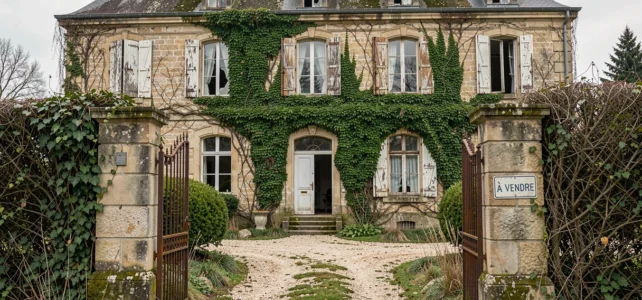
A castle or a manor sold for a symbolic euro refers to a real estate transfer where the acquisition price is intentionally reduced to a negligible amount. The transfer of ownership is real, formalized by a notary, but the financial counterpart does not lie in the displayed price. It resides in the obligations that the buyer accepts, notably a restoration work program framed by specific deadlines and conditions.
Reclassification as a public contract: the legal risk ignored in sales at 1 euro
When a municipality sells a heritage building for one euro, it generally imposes a specifications document: restoration within a given timeframe, cultural or tourist use, public access. This configuration can raise a rarely mentioned administrative law issue.
If the work program meets a public need (tourist reception, cultural activities, social housing), the operation risks being reclassified as a public works contract or concession. In this case, the municipality should have adhered to publicity and competition rules before awarding the property. A direct award, without a call for applications, can be contested by a third party and annulled by the administrative judge.
For the buyer, the consequence is direct: the project can be challenged after signing, sometimes after the work has begun. Verifying the exact nature of the obligations imposed by the municipality, and ensuring that they do not transform the sale into a disguised public contract, is part of the precautions to take before any commitment. A manor or castle for sale for 1 symbolic euro therefore requires a legal examination that goes beyond the simple notarial act.
Symbolic price and real counterpart: what the case law says
French law recognizes the validity of a sale for one euro, provided there is a serious counterpart for the buyer. A ruling from the third civil chamber of the Court of Cassation on October 13, 2016 (n° 15-11.128) confirmed this principle: the assumption of liabilities by the buyer constitutes a real counterpart that justifies a symbolic price.
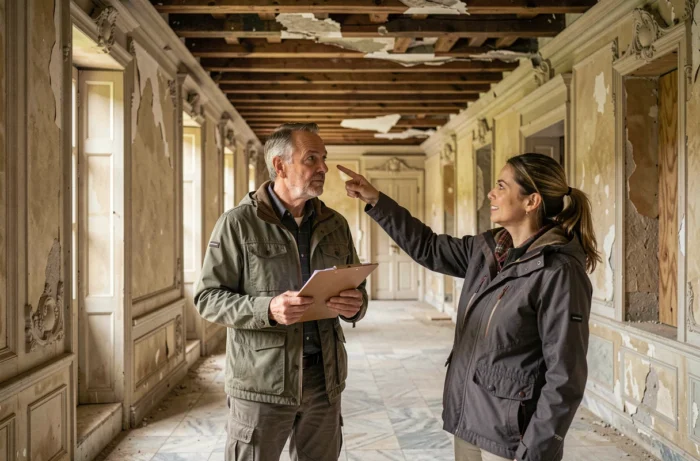
Applied to a manor or castle, the reasoning is the same. The liabilities refer to the state of the building: collapsed roof, rotten framework, absence of utilities, structural compliance. These liabilities represent a restoration cost that often far exceeds the market value of the property once renovated.
Buyback clause and obligation of result
Most sales contracts for one euro contain a buyback clause. If the buyer fails to comply with the work program within the set timeframe (usually a few years), the municipality can reclaim the property without compensating for the work already done. This clause transforms the sale into a conditional commitment.
The buyer does not therefore own the property unconditionally. They hold it on the condition of fulfilling their obligations. A prolonged work stoppage, a budget overrun that halts the work, or a change in personal circumstances can lead to the loss of the property and all the investment already made.
Restoration budget for a classified castle: the exploding costs
The purchase price of one euro masks the true cost of the project. The restoration of a heritage building, especially if it is classified or listed as a historical monument, is subject to technical and regulatory constraints that inflate each expense item.
- The materials must comply with the requirements of the Architect of the Buildings of France: original stone, natural slate, air lime, timber framing with compliant sections. No industrial substitutes are allowed on a classified building.
- Qualified labor (stonemasons, specialized carpenters, heritage roofers) charges significantly higher rates than in regular construction, and the intervention times are long.
- Preliminary diagnostics (structure, asbestos, lead, termites, pest status) regularly reveal pathologies invisible to the naked eye, which unpredictably increase the initial budget.
- Annual maintenance after work remains a recurring expense: a restored castle requires ongoing monitoring of the roof, facades, and exterior woodwork to avoid falling back into disrepair.
The total restoration cost almost always exceeds the market price for a comparable property in good condition. The symbolic euro does not save money. It provides access to a heritage project, not a good financial deal in the traditional sense.

Financial aid and heritage taxation: what really exists
Several mechanisms can reduce the financial burden, but none cover the entirety of the work. Grants from the DRAC (Regional Directorate of Cultural Affairs) fund part of the work on classified buildings, depending on variable budgets from one region to another. The Heritage Lottery has directed funds towards endangered monuments, but the selection remains competitive.
Tax deduction for historical monuments
The tax regime for historical monuments allows for the total deduction of property charges (work, maintenance, insurance) from overall income for a classified or listed property, without capping. This is a real advantage for highly taxed taxpayers, but it assumes that the buyer has sufficient income to absorb the expenses before deduction.
Without solid financial capacity, the tax deduction is of no use: one must first incur the amounts, then wait for the tax benefit the following year. A heritage restoration project for a symbolic euro is therefore aimed at financially solid profiles, not first-time buyers looking for a low-cost roof.
Sale at 1 euro: buyer profile and selection criteria of municipalities
Municipalities that sell a building for one euro do not sell to just anyone. The process involves a detailed application file, often accompanied by a bank certificate proving the ability to finance the work. Some local authorities require an architectural plan, a projected timeline, and sometimes a commitment to residence or economic activity on-site.
The filter is strict because the municipality is taking on responsibility. Selling a public monument to an individual who cannot complete the project amounts to losing the property and worsening its degradation. The selection of the file weighs as much as the price in the success of the project.
A manor for a symbolic euro is neither a scam nor a windfall. It is a transfer of heritage responsibility, legally framed, financially demanding, and reserved for project holders capable of mobilizing funds over several years. The entry price is negligible, but the real ticket costs hundreds of thousands of euros in work, maintenance, and regulatory constraints.