
Florence Kieffer is a French journalist and director, trained at CELSA (School of Advanced Studies in Information and Communication Sciences). Her career has been built around investigative reporting for major generalist channels, before shifting towards documentary production. Daughter of the advertiser Jacques Kieffer and sister of Tina Kieffer, she has carved out a professional path distinct from her family’s media notoriety.
Training at CELSA and grounding in audiovisual journalism
CELSA, affiliated with the University of Paris-Sorbonne, trains students in information and communication sciences. Florence Kieffer acquired the fundamentals of journalism applied to audiovisual media there, a choice consistent with a family environment focused on communication.
Her father, Jacques Kieffer, was vice-president of Ted Bates, an American agency specializing in the creation of advertising films. Her sister Tina Kieffer became known to the general public as a columnist on the show Frou-Frou, hosted by Christine Bravo on France 2 in the 1990s. While one can consult the biography of Florence Kieffer journalist from the perspective of her private life, it is her professional journey that truly distinguishes her trajectory.
Florence Kieffer chose field investigation over television hosting or commentary, a positioning that has distanced her from direct media exposure.
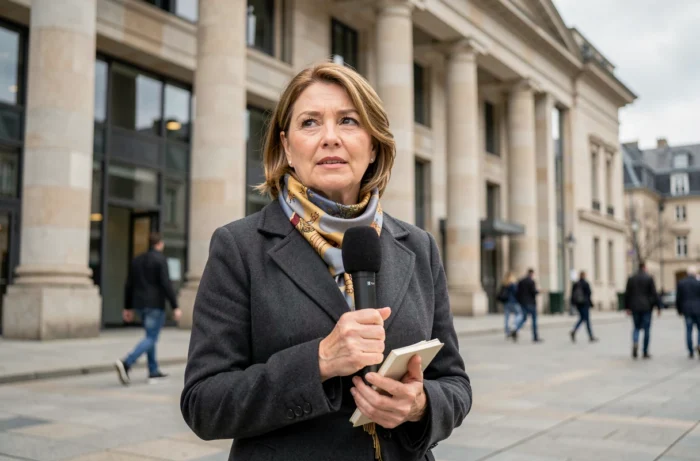
Investigative reports for M6 and Zone interdite
In 1999, Florence Kieffer joined M6 as a permanent journalist. From 2002, she became part of the team of Zone interdite, the societal magazine then hosted by Bernard de La Villardière.
The topics she covers for this show reveal a marked interest in areas of social friction. Among her documented investigations:
- A report on psychiatric emergencies, aired in 2003, which delved into the daily life of strained hospital services
- An investigation titled Passe-droits et pistons (2006), dedicated to the mechanisms of privilege in French society
- Several field reports on sensitive subjects where each topic required prolonged immersion work
This type of journalism, based on long observation and the collection of direct testimonies, stood out from the short format of television news. The duration of the investigations in Zone interdite allowed for the unfolding of economic or social mechanisms that traditional news coverage could only skim over.
Investigations for TF1 and Le Droit de savoir
Florence Kieffer also worked for TF1, producing reports for the show Le Droit de savoir. In 2003, she directed a documentary titled La guerre du tabac, trafics, chantages et mensonges, which dissected the practices of the tobacco industry.
This subject, at the intersection of economic investigation and public health, illustrates the realm in which she operated: long-term investigations into opaque systems. At that time, the tobacco industry was the subject of successive revelations in the United States, but the French ramifications remained poorly documented on television.
She also collaborated on the show Reportages on TF1, continuing to favor the documentary format over the studio. This consistency in choosing the field, across two competing channels, reflects a specialization recognized by newsrooms.
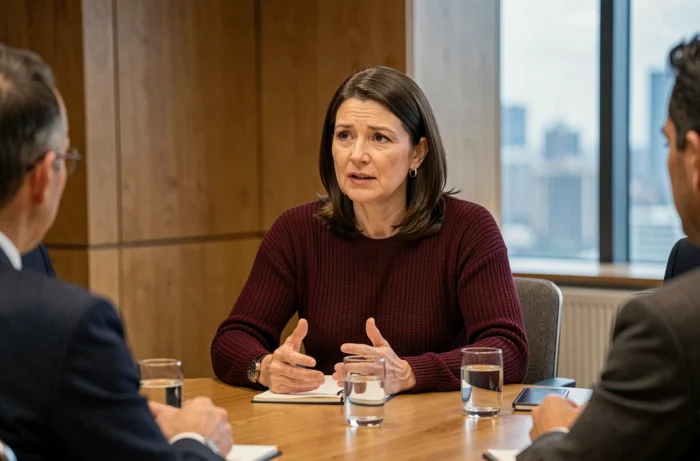
Bo Travail: documentary production since 2020
Since 2020, Florence Kieffer has been working at Bo Travail !, a production company specializing in documentaries and travel magazines.
The show Échappées belles is among the programs associated with this company. The transition from investigative reporting to documentary content production marks a change in register, but not a break: the long format and visual writing work remain at the center of the activity.
This career shift, rarely mentioned in online biographical profiles, sheds light on Florence Kieffer’s recent trajectory. She has moved from a role as a reporter-investigator in front of the camera to a role in design and production behind the scenes, which partly explains her current media discretion.
A path distinct from the media-covered private life
Florence Kieffer was the partner of Laurent Delahousse, presenter of the news on France 2. The couple has two daughters. This relationship, widely reported by the tabloid press, has often overshadowed the journalist’s professional journey in search results.
Laurent Delahousse later shared his life with Alice Taglioni. Media coverage then focused on the family restructuring, sidelining Florence Kieffer’s career in favor of a strictly personal angle.
The discrepancy between the number of articles dedicated to her romantic life and the little coverage of her journalistic work is significant. Her documentary filmography represents the most substantial part of her activity, but it remains under-documented compared to private biographical elements.
Lineage and communication: a family oriented towards the media
The Kieffer family presents an interesting case of professional transmission in the communication sector. Jacques Kieffer, the father, worked in television advertising at an international level with the agency Ted Bates. Tina Kieffer, the sister, hosted several television shows on France 2 and TF1 between 1992 and 1996 (Frou-Frou, Demain il fera beau, J’y crois, j’y crois pas).
Florence Kieffer has taken a less visible but technically demanding media path. Investigative reporting requires documentation, scouting, and editing work that spans several weeks or even months. This long timeframe, perhaps inherited from her father’s advertising production culture, distinguishes her approach from daily television journalism.
The fact that all three members of this family have worked in different branches of audiovisual communication (advertising, hosting, investigation) without ever collaborating directly on the same project remains a notable feature of this family trajectory.