The 2026 varietal calendar is moving on several simultaneous fronts. Between a European regulatory framework that redefines access to new plant genetics, foliage palettes that move away from all-green, and a functional approach to plants in urban environments, this season marks concrete shifts for both professionals and informed amateurs.
NGT Regulation and New Plant Varieties: What Changes for the Industry
The European Parliament adopted a regulation on June 17, 2026, governing plants resulting from New Genomic Techniques (NGT). This text structures two distinct categories that will shape the varietal offering for the upcoming seasons.
Plants classified as NGT1 exhibit limited genetic modifications, comparable to natural mutations or traditional selection. They benefit from a lighter regime: a simple verification procedure coupled with varietal registration, mandatory labeling on seed bags, and listing in a public European database.
NGT2 plants, which have more complex modifications, remain subject to a regime similar to transgenic GMOs, with comprehensive risk assessment and prior authorization. Plants made tolerant to herbicides or producing insecticidal substances are explicitly excluded from the NGT1 category.
We observe that this distinction will gradually expand the catalog of varieties available in garden centers and horticultural production, with implementation aimed around 2028. To follow the news at L’Herbe sous le Pied, this regulatory evolution deserves particular attention: it conditions the arrival of cultivars with unprecedented characteristics (drought resistance, prolonged flowering, compact growth) without going through the restrictive framework of traditional GMOs.
Colored Foliage and Graphic Varieties: Indoor Plant Trends 2026
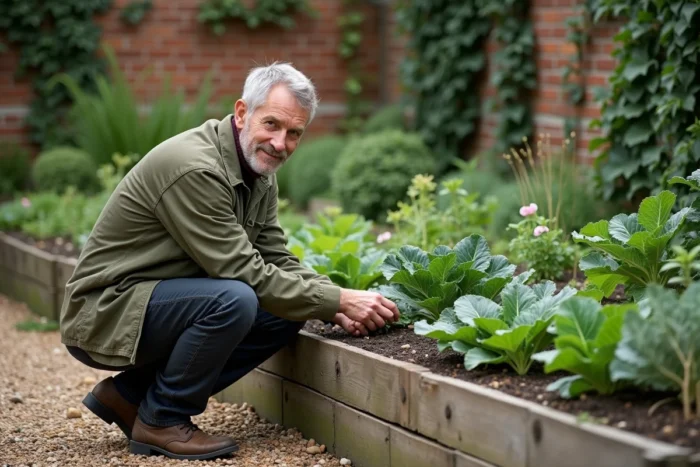
All-green is losing ground. Varieties with variegated, purple, or silver leaves are capturing attention this season. This shift is not merely a decorative trend: it reflects a varietal selection effort that brings stable cultivars to market, with reproducible colorations from one batch to another.
Diverse Foliage and Light Exposure
Colorful foliage plants generally require brighter light exposure than their green counterparts. A variegated variety produces less chlorophyll per unit of leaf area, which means compensating with higher light input. We recommend placing variegated varieties within one meter of an east or west-facing window to maintain the vibrancy of colors.
Graphic varieties (blade-like leaves, architectural silhouettes) respond to a minimalist decor trend. Fewer pots, but plants with a strong visual presence. The choice of pot contributes to the effect: raw earth containers, matte ceramics, clean lines.
- Purple and silver foliage: require a draining substrate and regular pruning to avoid reverting to green on new shoots
- XXL varieties (Strelitzia, Ficus lyrata): plan for annual repotting in a pot with a diameter two centimeters larger than the previous one
- Compact graphic plants (Sansevieria cylindrica, Zamioculcas): tolerate partial shade but lose foliage density if exposure is too low
Functional Greening of Urban Spaces: Beyond Decoration
The most structuring trend of this season does not concern interiors. The functional greening of cities is emerging as a priority axis for landscape actors. Green spaces can measurably reduce urban temperature: a mature tree evapotranspires a considerable amount of water through its foliage each day, producing a cooling effect comparable to several air conditioners running continuously.
This observation drives municipalities and landscapers to rethink plant selection based on precise technical criteria.
Selection Criteria for Sustainable Urban Plantings
The choice of plants is becoming a strategic issue for the sustainability of territories. Landscape professionals now integrate multi-criteria grids that go beyond mere aesthetics.
- Drought stress resistance: drought episodes necessitate prioritizing Mediterranean species or cultivars selected for their low watering needs
- Cooling capacity: leaf area, canopy density, and evapotranspiration rate determine a tree’s thermal efficiency
- Adaptation to urban soil: compacted substrates, root pollution, limited space – species with shallow or taproots do not react the same way
- Contribution to local biodiversity: native or nectar-producing species are favored to support pollinators and beneficial wildlife
Green Roofs and Planted Rooftops: An Expanding Stock of Technical Solutions
The development of green roofs is becoming more sophisticated. Inspirations for 2026 incorporate lightweight substrate systems, next-generation anti-root membranes, and plant palettes adapted to altitude constraints (wind, direct sunlight, thin soil thickness).
The choice of substrate determines the success of a green rooftop. A substrate that is too heavy compromises the supporting structure; a substrate that is too light dries out within hours during heat spikes. Current solutions combine pumice, stabilized compost, and organic water retainers to achieve a balance between drainage and water retention.
Sedums and low grasses remain the basis for extensive roofs, but semi-intensive projects now include low shrubs, herbs, and even small fruit trees on accessible terraces. This plant diversification increases maintenance complexity but multiplies benefits: thermal insulation, rainwater retention, habitat for urban wildlife.
The 2026 season confirms a fundamental orientation: plants are no longer just an element of interior decoration or landscape enhancement. They are becoming a technical tool, framed by new regulations, selected based on measurable performance criteria. Professionals and informed individuals who integrate these parameters from the varietal choice stage gain a competitive edge for the upcoming seasons.