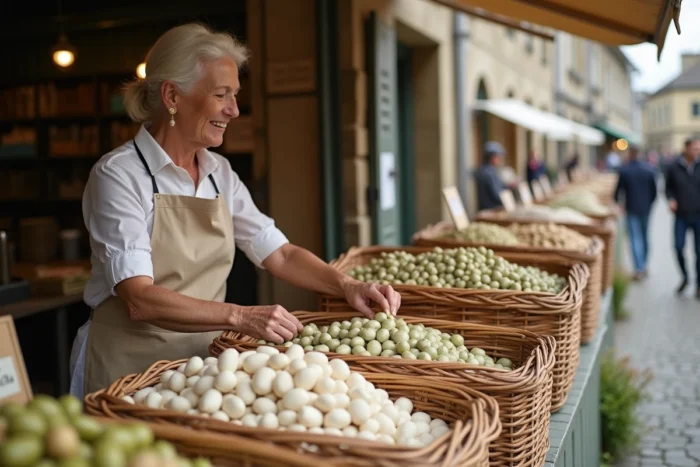
The coco de Paimpol AOP is sold during a short window, from July to November approximately. During this period, the question of the purchasing channel arises with particular acuity: supermarkets, open-air markets, farm drives, or on-farm sales do not offer the same product or freshness. The semi-dry bean quickly loses its qualities once harvested, making the supply chain crucial for the result in the kitchen.
Farm Drives in Côtes-d’Armor: A Recent Channel for Coco de Paimpol AOP
Since 2023, several farm drives in Côtes-d’Armor, supported by the Chambers of Agriculture, have been listing producers of coco de Paimpol AOP in season. The principle is simple: order online, pick up at a collection point, without the intermediary of large distribution.
This channel presents a notable logistical advantage. Coco de Paimpol does not keep well in its pod: it should be cooked or frozen as soon as possible after purchase. A farm drive with a fixed collection day shortens the chain between harvest (always manual, pod by pod) and your kitchen.
For those who wish to buy coco de Paimpol directly, these platforms provide a credible alternative to markets, especially when market hours are inconvenient.
Field feedback varies on one point: not all drives publish harvest dates or the name of the producer. Check this information before ordering, as the AOP imposes a geographical area and specific agricultural practices.
Direct Sales at the Farm: Finding Coco de Paimpol Producers
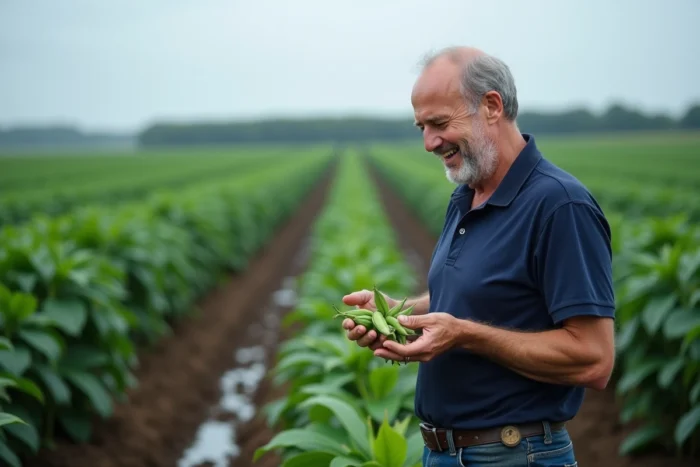
The AOP area includes nearly 200 producers spread across Côtes-d’Armor. Not all practice direct sales, but an increasing number are opening their doors to the public in season. Some also offer vegetable box subscriptions that include coco when available.
Buying at the farm remains the shortest circuit. You see the fields, you discuss the year’s conditions (sunshine, rainfall, maturity calendar), and you leave with a product harvested the same day or the day before. For a semi-dry bean whose texture and nutty flavor degrade quickly, this freshness makes a measurable difference in cooking.
How to Find a Producer Selling Directly
- The Chambers of Agriculture of Côtes-d’Armor maintain directories of local producers, accessible online or by phone, indicating the sales methods practiced.
- The tourist offices of Paimpol and Guingamp direct visitors to farms open to the public during the coco season.
- Local social media (Facebook groups of Breton producers, Instagram accounts of Côtes-d’Armor farms) often announce the first harvests and sale days.
One detail to keep in mind: farm sales do not always imply a lower price than that of the market. The producer sets their price without the pressure of a wholesaler, but also without logistical pooling. The real gain lies in freshness and traceability, not necessarily in the price per kilo.
Local Markets in Brittany: Stalls Where Coco de Paimpol Really Moves
Open-air markets remain the historical distribution channel for coco de Paimpol. On the quay of Paimpol, in Guingamp, in Saint-Brieuc, or in neighboring municipalities, producers and market gardeners sell in pods or shelled grains ready to use.
Prefer stalls run directly by producers rather than by resellers. The difference can be spotted by a few clues: the producer knows the exact variety, can indicate the harvest date, and often sells other vegetables from their own farm. A reseller may have a broader stall but provides vaguer answers about the precise origin.
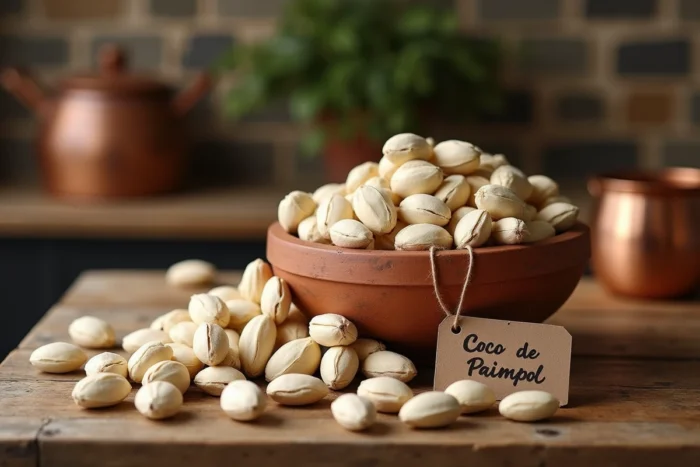
The coco de Paimpol AOP season runs from July to November. The pods should display a straw-yellow color with purple marbling, and the grains inside should be white, oval, almost round. If the pods are entirely green or speckled with brown, move on.
Shelled or in Pod: What to Choose at the Market
A kilo of coco de Paimpol in pod yields about 400 to 450 grams of grains, which is a portion for three or four people. Buying in pods allows for a visual check of freshness (flexibility of the pod, absence of drying). Packs of shelled grains save time but make quality control more difficult.
Coco de Paimpol requires no soaking before cooking, unlike most dried beans. A simple rinse of the grains is sufficient. This characteristic, linked to its status as a semi-dry bean harvested before full maturity, clearly distinguishes it from dried cocos sold year-round in grocery stores.
Storage After Purchase: Freezing and Mistakes to Avoid
Coco de Paimpol freezes very well after shelling. It is unnecessary to wash the grains or blanch them before putting them in the freezer. However, keeping the pods for several days in the refrigerator degrades the product: the texture of the grains becomes floury and the characteristic nutty flavor fades.
The practical rule: shell and cook on the day of purchase, or shell and freeze immediately. Any intermediate solution (pod in the fridge “for tomorrow,” grains left out on the counter) will yield disappointing results.
- Immediate shelling after purchase, without prior rinsing for freezing.
- Freezing flat on a tray before bagging, to avoid a compact block.
- Direct cooking from frozen state, without thawing, in simmering water.
The coco de Paimpol AOP was the first French vegetable to obtain AOC status in 1998, then AOP status at the European level in 1999. This double certification protects the production area and cultivation methods, but it does not guarantee anything about storage conditions after harvest. The responsibility for preservation rests entirely with the buyer once the product leaves the stall or the drive.