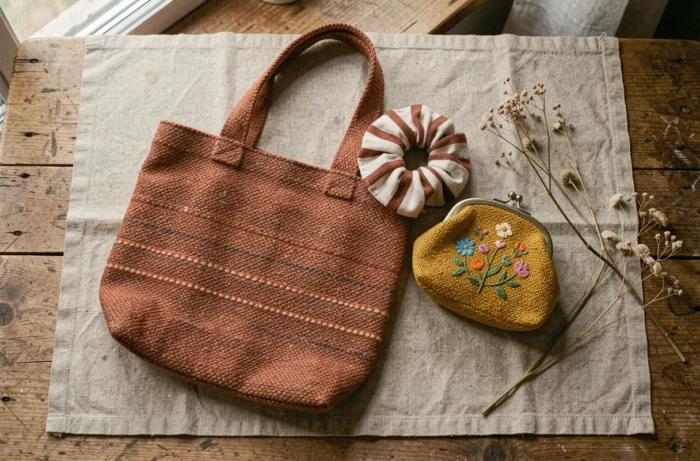
A cotton tote bag that fades after three washes, we’ve all experienced that. The problem doesn’t come from the material, but from the dye used and the lack of control over the production chain. When looking for ethical and colorful textile accessories for everyday use, the durability of colors is as important as environmental commitment. Finding pieces that deliver on both fronts requires looking beyond marketing.
Textile Dyes and Color Fastness: What Makes the Difference
Oeko-Tex certified dyes or those compliant with the GOTS standard exclude certain heavy metals and harmful substances, which limits the available palette compared to conventional processes. Workshops that work with plant-based dyes or certified pigments compensate for this constraint with suitable fixation techniques (mordanting, prolonged baths) that enhance wash durability.
Specifically, a scarf dyed with properly fixed natural indigo retains its depth much longer than an accessory dyed with a low-quality synthetic dye. Feedback on this point varies depending on the fibers used, but organic cotton generally absorbs natural pigments better than chemically treated conventional cotton.
French designers now offer accessories in vibrant colors, made in France or in certified partner workshops. Notably, on marie-carotte.fr, you can find textile pieces that illustrate this approach combining bright color and responsible production.
Verifiable Labels on Textile Accessories: Distinguishing the Real from the House Logo
A label without an independent certifying body guarantees nothing. A logo designed by the brand itself, no matter how pretty, has no proof value.
Two certifications consistently come up when discussing ethical textile accessories:
- GOTS (Global Organic Textile Standard) covers the entire chain, from organic fiber to manufacturing, imposing social and environmental criteria verified by external audits.
- Oeko-Tex Standard 100 guarantees the absence of harmful substances in the finished product, which directly concerns accessories worn close to the skin (socks, headbands, scarves).
- The France Terre Textile label certifies that at least three-quarters of the manufacturing steps are carried out in French textile regions, a traceable and verifiable criterion.
When purchasing a pouch, bag, or cotton case, the presence of one of these labels on the label or product sheet serves as a reliable marker. Without this mention, it’s better to ask the manufacturer directly.
Fast Fashion Law 2026 and Ethical Accessories: What It Changes in Purchasing
France adopted a law in July 2026 dedicated to the environmental impact of disposable fashion. This legislation concretely alters the landscape for brands selling textile accessories.
Disposable fashion brands are now subject to enhanced obligations regarding the environmental communication of their products. For small ethical brands, this is a change in context: they are no longer solely relying on consumer goodwill, but benefit from a framework that penalizes misleading practices of their competitors.
At the same time, the environmental display system for textiles is being rolled out in France. It is based on a life cycle analysis and incorporates specific textile criteria such as durability and microfibers. Even though it remains voluntary for now, this system allows for the comparison of accessories on objective bases.
For us, buyers, this means we have more and more tools to verify a brand’s promises. A textile accessory sold as eco-friendly without any verifiable data is becoming increasingly suspect in the eyes of the regulations.
Organic Cotton, Linen, Hemp: Choosing the Fiber According to the Accessory’s Use
You wouldn’t choose the same material for a shopping bag and a hairband. The choice of fiber depends on the daily use of the item.
Organic cotton remains the most versatile fiber for everyday accessories: pouches, tote bags, socks. Its softness makes it suitable for direct contact with the skin. Made in France, organic cotton accessories often have a sufficiently dense weight to withstand wear.
Linen, primarily grown in northern France, has an advantage for summer accessories: it dries quickly and feels cool to the touch. It can be found in scarves, pouches, and cases in naturally soft colors. Its slightly irregular texture gives a sought-after artisanal look.
Hemp, more durable than cotton, is suitable for bags and accessories subjected to mechanical stress. Its cultivation requires little water, making it a coherent fiber for an ethical approach. French brands that use it sometimes blend it with organic cotton to gain flexibility without losing strength.
Care and Color Longevity
A colorful textile accessory lasts longer when a few simple gestures are respected: cold washing, drying in the shade, no bleach. These precautions are particularly important for pieces dyed with natural pigments, which are more sensitive to prolonged UV exposure.
Turning accessories inside out before washing protects the visible side from friction in the machine. For linen pieces, a damp ironing revives the colors’ brightness without damaging them.
Ethical fashion made in France now covers a wide range of colorful textile accessories, from socks to scarves to bags and cases. With the fast fashion law of 2026 and the gradual rollout of environmental display, checking labels and the traceability of an accessory has never been more accessible.