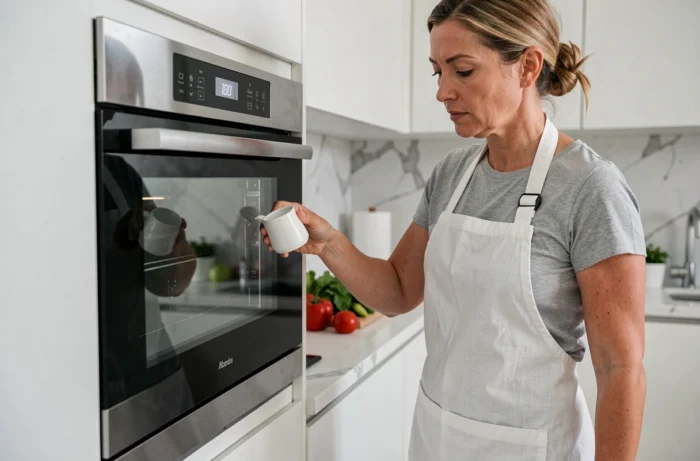
An empty reservoir while cooking vegetables, and the steam that suddenly stops after twenty minutes: we’ve all experienced that moment when the oven switches to dry heat without warning. The question of water in a steam oven isn’t just a matter of “yes or no.” It concerns when to fill it, the level to monitor, and the subtle signals that indicate the steam injection has ceased.
Signs that the steam oven is not injecting enough water during cooking
The first clue is auditory. On most models with an internal generator, you can hear a slight crackling when the water comes into contact with the heating element. When this sound disappears during cooking, it means the tray or reservoir is dry.
The second signal is visual. By briefly opening the door, you should normally see an immediate release of steam. If the air that comes out is dry and the condensation on the inner glass has disappeared, the oven is operating in conventional dry heat mode, even if the steam program is still displayed.
Third indicator: the result on the plate. Vegetables that start to brown at the edges instead of remaining tender and evenly colored, bread whose crust hardens too quickly without developing a shine, are concrete markers of a lack of steam in the cavity. Additional explanations can be found on the Le Comptoir des Délices website, particularly regarding the distinction between internal and external generators.
Some combined ovens display a “fill the reservoir” alert on the control screen. Feedback varies on this point: depending on the brands, this alert sometimes comes with a delay of several minutes, which allows the cooking to switch to dry mode.
Filling or emptying the steam oven reservoir: the right timing
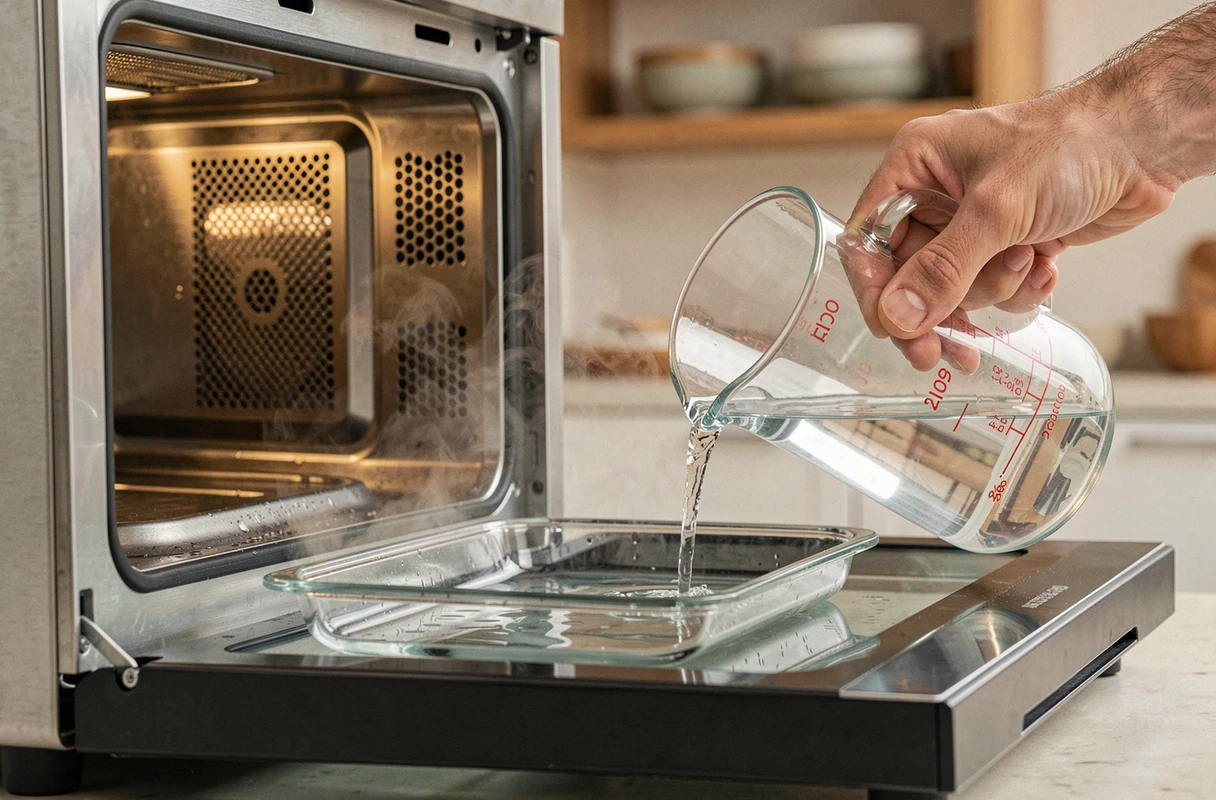
The reservoir should be filled before each steam cooking session, not during. Adding cold water to a hot reservoir can cause thermal shock in some models with an internal generator and may damage the tray or project scalding steam upon opening.
Before cooking
Fill the reservoir to the “max” mark with cold water. For ovens with a removable reservoir, take it out, fill it at the tap, and put it back in place. For models connected to a water supply, this step is automatic.
During cooking
If the oven signals an empty reservoir during the program, the procedure varies depending on the appliance:
- On a model with a removable external reservoir, it is generally possible to remove and fill it without interrupting the program, but it should be done quickly to limit heat loss in the cavity.
- On an oven with an internal tray (bowl in the cavity), it is not recommended to add water during cooking due to the risk of burns and thermal shock on the enamel.
- On an oven connected to the water supply, this issue does not arise: the supply is continuous as long as the inlet is open.
After cooking
Emptying the reservoir after each use limits limescale buildup in the circuit. Stagnant water in a warm tray also promotes bacterial growth, especially if the oven remains closed for several days.
Tap water or filtered water in a steam oven: impact on maintenance
Limescale is the main enemy of the steam circuit. Very hard water clogs the generator, gradually reduces steam flow, and eventually blocks the injection nozzles. The problem is that this degradation is slow: you only realize it when cooking becomes uneven.
Most manufacturers recommend adjusting the water hardness in the oven settings to adapt the frequency of automatic descaling cycles. This information is found on the water bill or can be measured with a test strip.
Using filtered water (filter jug or tap filter) reduces limescale but does not eliminate it completely. Pure demineralized water is discouraged by several brands, as it can corrode certain metallic components of the generator.
Steam cooking and combined cooking: two different water needs
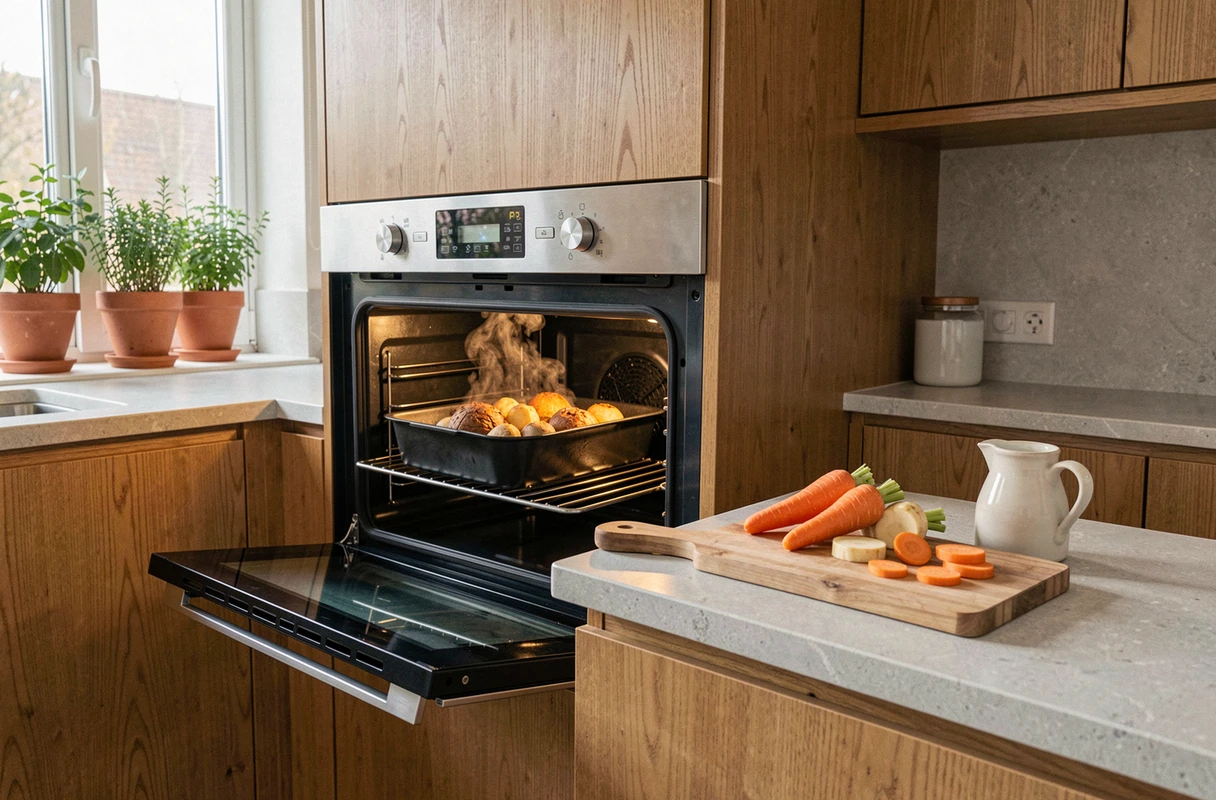
In 100% steam mode (cooking vegetables, fish, rice), the oven consumes a lot of water. The reservoir can empty in less than an hour on a full-power program. This is the mode that requires the most vigilance regarding the water level.
In combined mode (steam + convection), the injection is intermittent. The oven alternates between dry and humid phases to achieve, for example, a tender roast inside with a golden crust. Water consumption is significantly lower, and a fill at the beginning of cooking is usually sufficient for the entire duration of the program.
The frequent confusion comes from the trick of placing a ramekin of water in a conventional oven to humidify the cavity when baking bread. This gesture has nothing to do with the operation of a steam oven. The ramekin produces unregulated, sporadic humidification, while the steam oven controls the flow, temperature, and pressure of the injected steam.
Quick checklist before starting steam cooking
- Check that the reservoir is filled to the maximum mark and properly engaged in its housing.
- Ensure that the injection nozzles (visible in the cavity on some models) are not blocked by limescale or food residues.
- Check the water hardness setting in the oven menu, especially after a move or change of water source.
- Listen for the characteristic crackling in the first few minutes to confirm that steam is being produced.
A steam oven that operates without water in the reservoir is just a conventional oven with a digital display. Steam does not generate itself, and no automatic program compensates for an empty reservoir. Taking thirty seconds to check the level before each cooking session remains the most cost-effective gesture to preserve the quality of dishes and the longevity of the appliance.