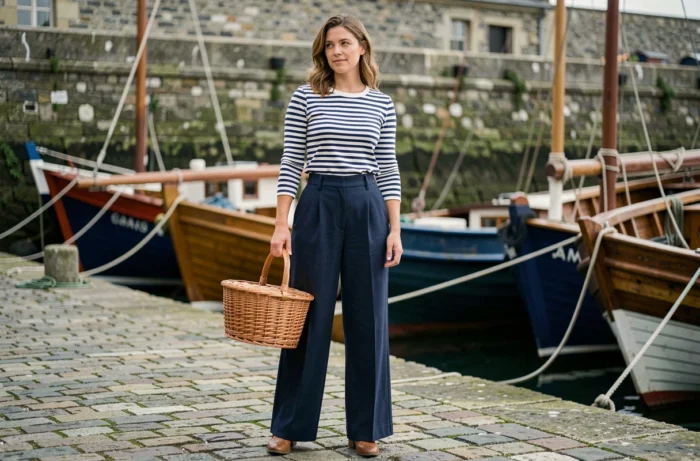
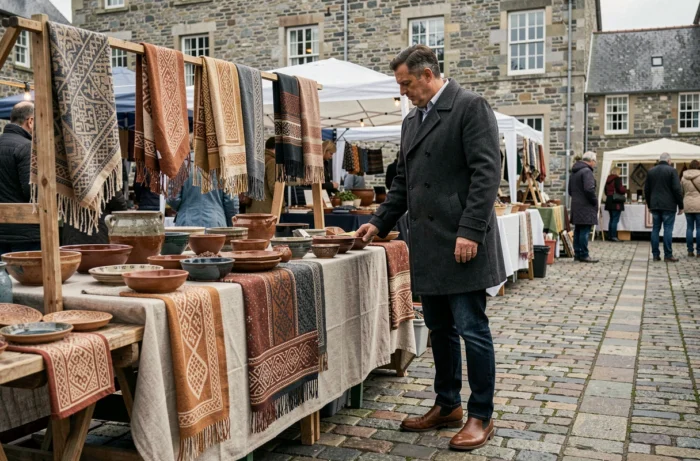
At a creators’ market in Quimper, a unique piece jacket catches the eye: recycled embroideries sewn onto a raw linen canvas. The price is displayed, as is the origin of each piece of fabric. This type of item perfectly summarizes what is happening in Breton fashion today: we are no longer content with just reinterpreting the sailor shirt; we are rebuilding an industry.
Textile Upcycling in Brittany: Unique Pieces from Recycled Embroideries
In Auray, textile artist Corinne Chapelle launched a collection of jackets made from Breton embroideries, satin ribbons, and repurposed lace in February 2026. Each piece is unique by definition, as the starting material cannot be reproduced.
We are far from simple cosmetic recycling. Breton textile upcycling starts from local know-how to create new garments from materials that would have ended up as waste. Corinne Chapelle also offers textile art and mixed techniques workshops, which opens creation to a broader audience than just fashion professionals.
To explore other creators working in this spirit, one can check fashion on the Jolie Breizh website, which brings together several brands and artisans from the region.
This upcycling movement is not limited to jackets. In Saint-Jean-du-Doigt, an eco-textile project uses artichokes as raw material to develop local plant fibers. The approach is still experimental, but it shows that Brittany is seeking concrete alternatives to imported materials.
Linen Industry in Brittany: The Return of Local Processing
Most articles on Breton fashion talk about style, colors, and reinterpreted sailor shirts. Few mention the industrial question that plays out upstream: where is the thread produced?
In July 2026, the company Bretagne Lin restarted a retting factory in Lampaul-Guimiliau, in Finistère. The goal is to locally produce linen thread from regional crops, combining agriculture, processing, and employment in the same area.
Breton linen benefits from a favorable climate, but for decades the fiber was sent elsewhere for processing (often to Asia). The relocation of this step changes the game for creators who want complete traceability of the material.
What This Means for Local Brands
A sewing workshop located in Quimper or Lorient can now source linen thread produced less than a hundred kilometers away. For a brand that claims a Breton identity, the traceability of linen from cultivation to finished garment becomes a verifiable argument, not just a marketing slogan.
Feedback varies on the quality of locally processed linen compared to more established supply chains, but the momentum is underway. Several contemporary creators are already incorporating this linen into their seasonal collections.
Mod Show and Fest-noz: When Breton Textile Creation Comes Out of the Workshop
Breton fashion does not only exist in boutiques. It is showcased in contexts specific to the region, which have no equivalent elsewhere in France.
At the Festival de Cornouaille in Quimper, the Mod show features creators who reinterpret Breton textiles. In 2026, six young creators presented pieces ranging from stage wear to ready-to-wear, all inspired by traditional techniques and patterns.
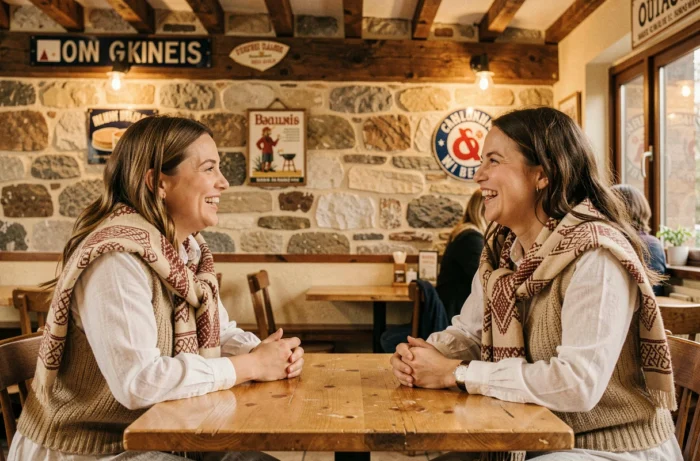
What distinguishes these events is the direct link between Breton dance, music, and clothing. The fest-noz remains a living laboratory where clothing is tested in motion, not just worn on a runway. A cut that does not allow for dancing does not survive the test of the field.
Sewing Workshops that Fuel the Local Scene
In Morbihan, seamstresses like Konstantina (who has worked for Disneyland and the Paris Opera) have chosen to open their own workshop in Brittany. This type of career path fuels local creation with high-level technical skills, applied to custom or small series pieces.
The profession of independent seamstress remains economically demanding, but the demand exists. Clients come for alterations, custom creations, and increasingly for the repair of existing garments.
Textile Repair Bonus: An Underutilized Lever in Brittany
Since the implementation of the repair bonus, a discount ranging from 6 to 25 euros is granted depending on the type of repair performed. On paper, it’s a concrete boost to extend the lifespan of garments.
In practice, most clients are unaware of the repair bonus, as lamented by a seamstress from Morbihan interviewed by the local press. The program suffers from a communication deficit, and artisans often have to explain its existence themselves.
Here’s what can be repaired under this program:
- Hems, zippers, and buttons on everyday clothing, with partial cost coverage
- Stitching repairs on linen or wool pieces, including traditional Breton garments
- Adjustment alterations to adapt a vintage or second-hand piece to one’s morphology
For Breton creators who focus on sustainability, this bonus could become a selling point: a well-designed garment made from solid material can be easily repaired at a low cost. However, information must circulate among the public.

Current Breton fashion is not just about style or colors. It engages a comprehensive vision, from flax cultivation to the repair of the finished garment. The workshops, local supply chains, and public initiatives form an ecosystem that gives this regional fashion a foundation that few French territories can claim today.