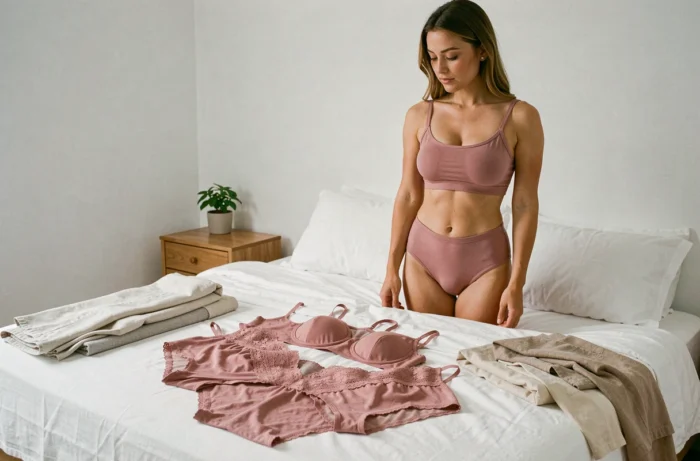
A day in heels with an underwired bra that digs into the underbust by 2 PM, or a panty whose seams show under fitted pants: we all know these situations. The choice of everyday women’s lingerie relies less on the aesthetics of a display set than on how we feel after eight hours of wear. Recent trends confirm this shift: prolonged comfort now dictates the shapes, materials, and finishes.
Everyday Wireless Bras: Why the Underbust Band Changes Everything
Support is often associated with the presence of a rigid underwire. In reality, on recent wireless models, it is the underbust band and the width of the straps that provide support. Brands historically focused on underwire and push-up, like Chantelle or Aubade, are expanding their ranges to include wireless constructions, even for deep cups.
Specifically, when trying on a wireless bra, the first thing to check is that the elastic band under the bust remains horizontal at the back, without riding up. If it rides up, the band size is too large, and support will be insufficient, regardless of the model’s quality.
The preferred materials for these everyday models are microfiber and cotton-modal, which wick moisture better than standard polyester. For those hesitant to explore wireless lingerie, a first test during a day of remote work allows for assessing comfort without social pressure related to the silhouette under fitted clothing.
Seamless Lingerie: The Cut That Disappears Under Fitted Clothing
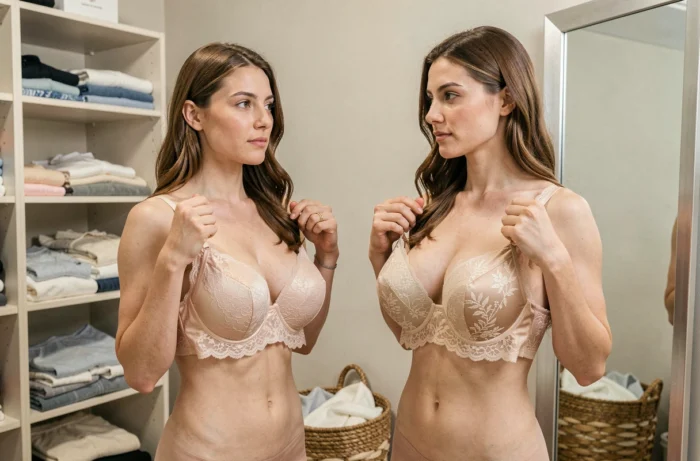
Seamless is no longer a niche marketing argument. Recent collections have made it a standard under close-fitting clothing, leggings, bodycon dresses, or fine-knit pants. The reason is simple: a classic seam creates a visible relief as soon as the outer fabric is less than a millimeter thick.
There are two levels of seamless finishing. The first involves laser-cut edges, where the fabric is simply cut cleanly without a hem. The second, more advanced, uses tubular knitting that forms the panty or bralette in one piece, also eliminating side seams.
When Seamless Isn’t Enough
Under a white or very thin fabric, even a seamless panty can show if its color contrasts with the skin. The classic nude reflex works for lighter skin tones, but feedback varies on this point for medium to dark skin tones. In this case, choosing a shade slightly darker than one’s own skin tone further reduces the demarcation compared to a standard beige.
Materials and Prolonged Comfort: Cotton, Microfiber, or Lace for Everyday
The choice of material directly affects the sensation after several hours. Here are the three common families and their actual behavior when worn:
- Cotton and cotton-modal: absorb sweat well, dry relatively quickly, and are suitable for sensitive skin. Pure cotton can deform after several washes, hence the interest in a blend with modal or a small percentage of elastane.
- Microfiber (polyamide-elastane): finer, it dries quickly and retains its shape for a long time. However, it retains odors more than cotton and requires regular washing at low temperatures.
- Lace: often perceived as reserved for special occasions, it can be worn daily if the weave is soft and the edges are softened (so-called “flat” lace or without excessive relief). Rigid lace that itches by the end of the day indicates a weave that is too tight or a poor-quality synthetic thread.
A quick fitting test: rub the fabric against the inside of your wrist for a few seconds. If it irritates this sensitive area, it will also irritate the skin on the bust or groin after several hours.
Choosing Your Lingerie Size: Concrete Mistakes to Avoid
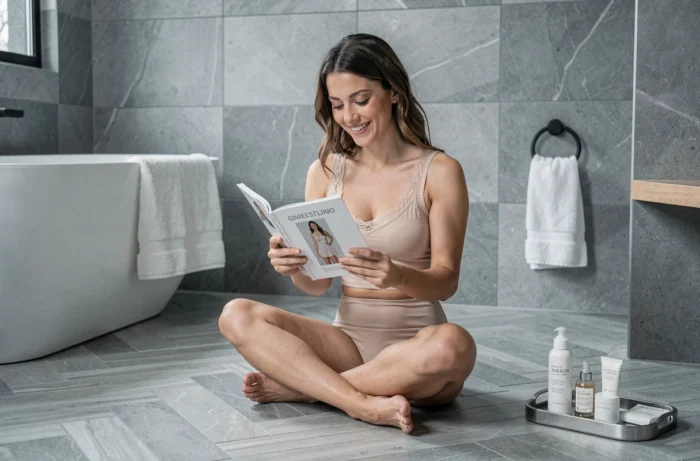
Size remains the main point of friction. We often wear the same size for years while our bodies change (weight, posture, breastfeeding, sports activity). Bust size and cup size are not constants.
The Trap of a Band That’s Too Large
When a bra feels uncomfortable, the common reflex is to go for a larger band size. Generally, the opposite should be done. A band that is too large compensates with the straps, which creates shoulder pain. The band should be tight enough to stay horizontal, even with the straps lowered.
Panties and the Question of Abdominal Support
For panties, size plays a different role. A panty that is too small rolls over itself at the waist and creates a “muffin top” effect under clothing. A panty that is too large gapes and wrinkles. For silhouettes looking for slight abdominal support without resorting to shapewear, high-waisted microfiber models offer a functional compromise without excessive compression.
Lingerie Care: What Really Prolongs Lifespan
We often talk about hand washing, but in practice, few people do it daily. A mesh laundry bag in the washing machine at 30 °C effectively protects delicate fibers and lace. The truly destructive factor is the tumble dryer: heat degrades elastane and distorts molded cups in just a few cycles.
Another practical detail: fastening the hooks before washing prevents them from snagging lace or microfiber from other pieces in the drum. Alternating two or three bras instead of wearing the same one every day gives elastic fibers time to regain their shape.
The daily lingerie budget should be considered over time. A few well-chosen pieces in durable material, worn in rotation and washed properly, last significantly longer than a dozen cheap models replaced every three months. Everyday comfort starts with choices of material, size, and care, not accumulation.